
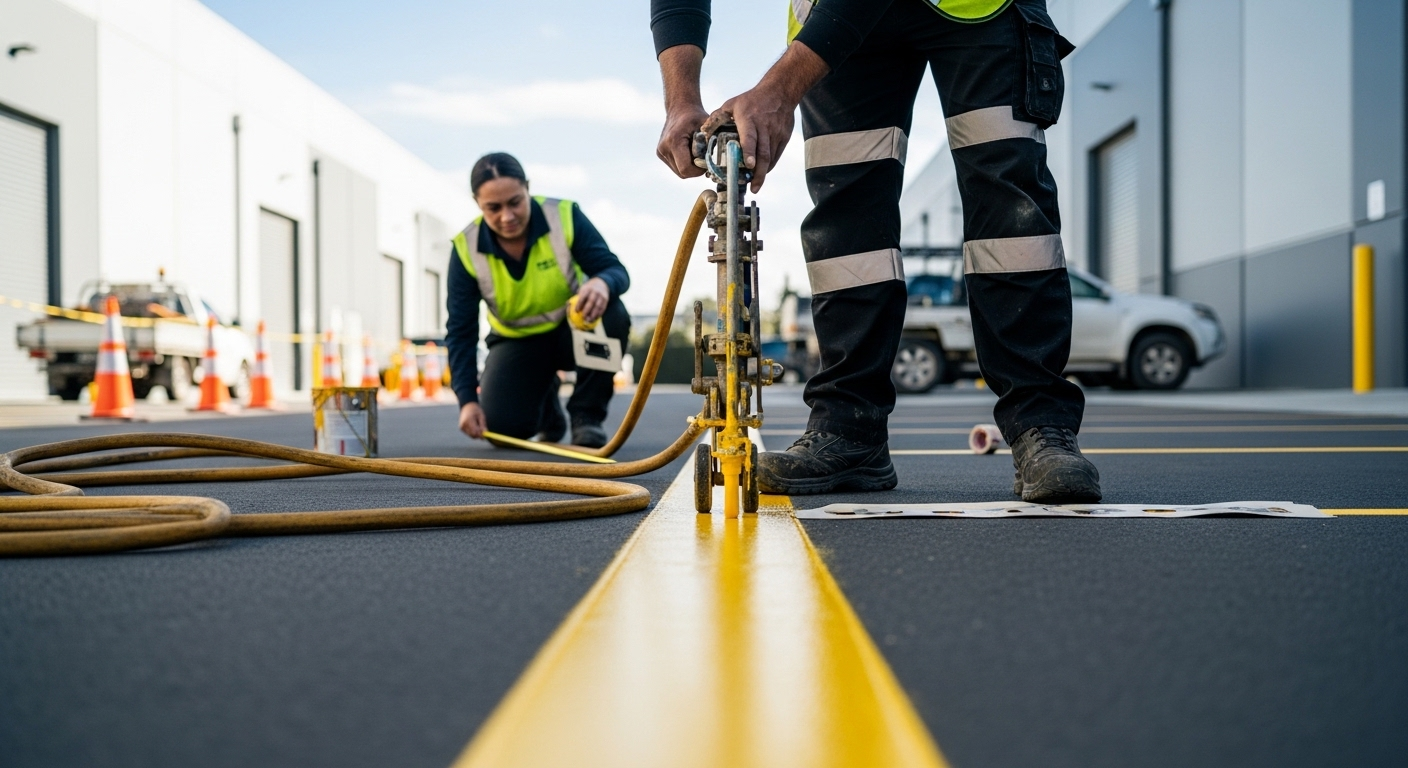
The Clear Advantage: Guiding Auckland with Professional Line Marking
Beyond the Paint: How Professional Line Marking Protects Your Auckland Business
Key Takeaways
- Clear, professional line marking is a fundamental safety measure that helps businesses meet their legal and moral duty of care.
- New Zealand's workplace incident rates are alarmingly high, making proactive safety systems like line marking essential for risk mitigation.
- Effective line marking in car parks improves traffic flow, maximises space, and ensures accessibility compliance.
- In warehouses and factories, designated walkways and operational zones are critical for separating pedestrians from machinery and preventing accidents.
- Using high-quality, compliant materials ensures markings are durable and visible, providing long-term value and safety.
As a business owner in Auckland, you're constantly juggling priorities. But there's one responsibility that sits above all others: the safety of your people. It’s a heavy weight, and the statistics in New Zealand don't make it any lighter. The reality is that our country has a concerning track record for workplace safety.
In fact, New Zealand has one of the highest rates of serious workplace incidents in the OECD. To put that in perspective, our workplace fatality rate is double that of Australia and four times higher than the UK. By June 2025 alone, a staggering 18,270 work-related injury claims resulted in more than a week away from work. These aren't just numbers; they represent families, colleagues, and communities affected by preventable incidents.
So, where do you start? How do you turn your physical space from a potential hazard into a safe, efficient environment? It often begins with something that’s right under your feet.
From our 50+ years of combined experience in the industry, we know that professional line marking is one of the most effective and direct ways to manage risk. It’s the silent language of your workplace, guiding behaviour, preventing confusion, and creating order out of chaos.
The Unseen Dangers of Neglected Spaces
It’s easy to overlook gradual decay. A faded stop line, a blurred walkway, a car park that’s become a free-for-all. We've seen it countless times. Businesses get busy, and re-marking the car park or warehouse floor falls to the bottom of the list. But neglected markings create ambiguity, and ambiguity is where accidents happen.
Think about other high-risk sectors. We know that farming continues to be the leading cause of workplace deaths in New Zealand , largely due to the interaction between people and heavy machinery. A warehouse or a busy commercial car park operates on the same principle. Without clear rules of engagement, the risk of a collision between a forklift and a staff member, or a vehicle and a pedestrian, increases dramatically.
The most serious threats are often the ones we don't see. For example, WorkSafe New Zealand states that asbestos exposure is responsible for around 220 deaths each year , making it a leading cause of workplace death. It’s a hidden danger. In the same way, faded, unclear, or non-existent line marking is a hidden operational hazard that can have severe consequences.
Transforming Car Parks into Safe, Efficient Assets
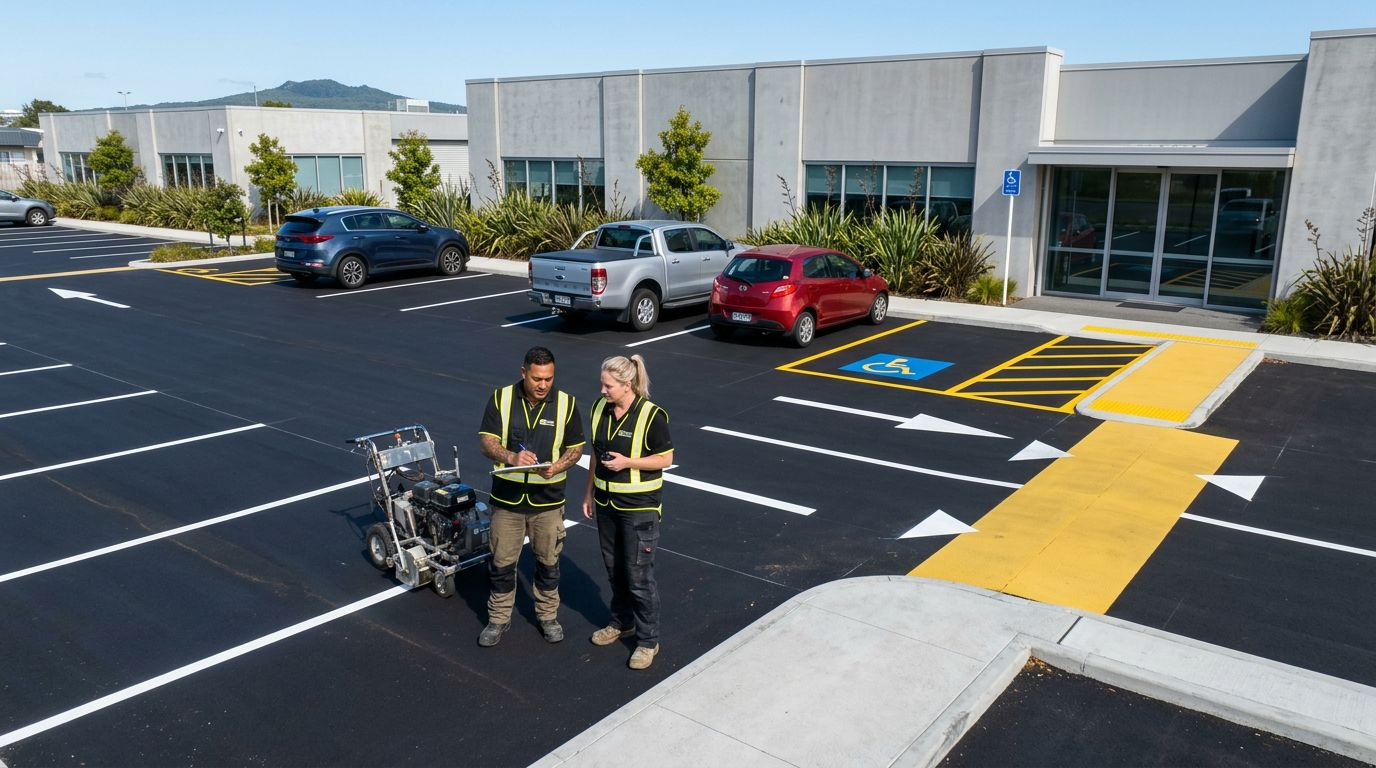
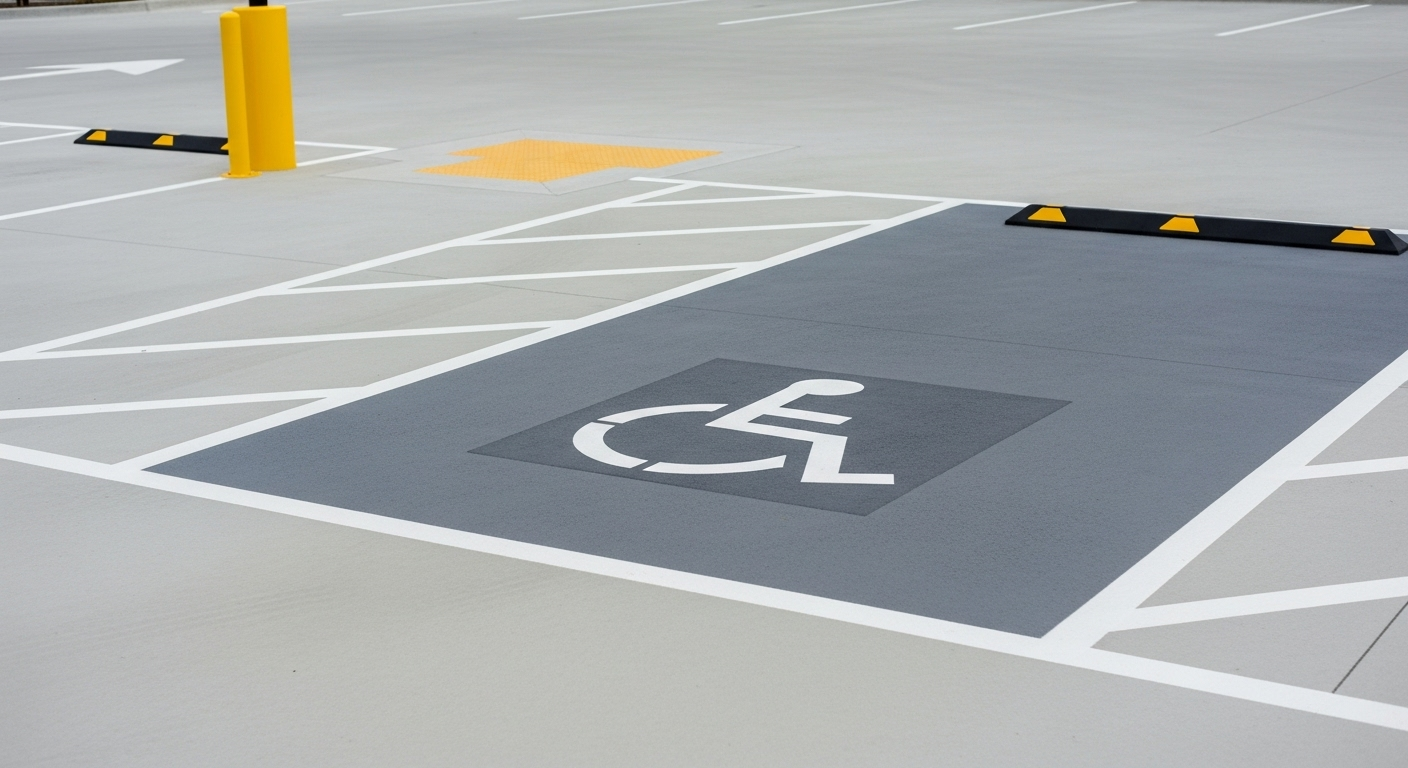
Your car park is often the first and last impression a customer has of your business. Is it organised and safe, or chaotic and confusing? Clear markings do more than just show people where to park. They control traffic flow, designate safe pedestrian routes, and ensure compliance with accessibility standards.
A common mistake we see is businesses trying to work with an outdated, inefficient layout. Space is wasted, and traffic flow is awkward. This is why we often work on designing NZ car parks for safety, flow & compliance , not just repainting old lines. By redesigning existing car park markings with our clients, we can optimise and utilise the space as much as possible. Sometimes, a few small changes to the layout can dramatically improve safety and capacity.
Using vibrant, bright paint also gives a car park a new lease of life, making it look professional and cared-for. It’s a simple change that signals to staff and visitors that you take pride in your premises and prioritise their safety.
Bringing Order and Safety to the Warehouse Floor
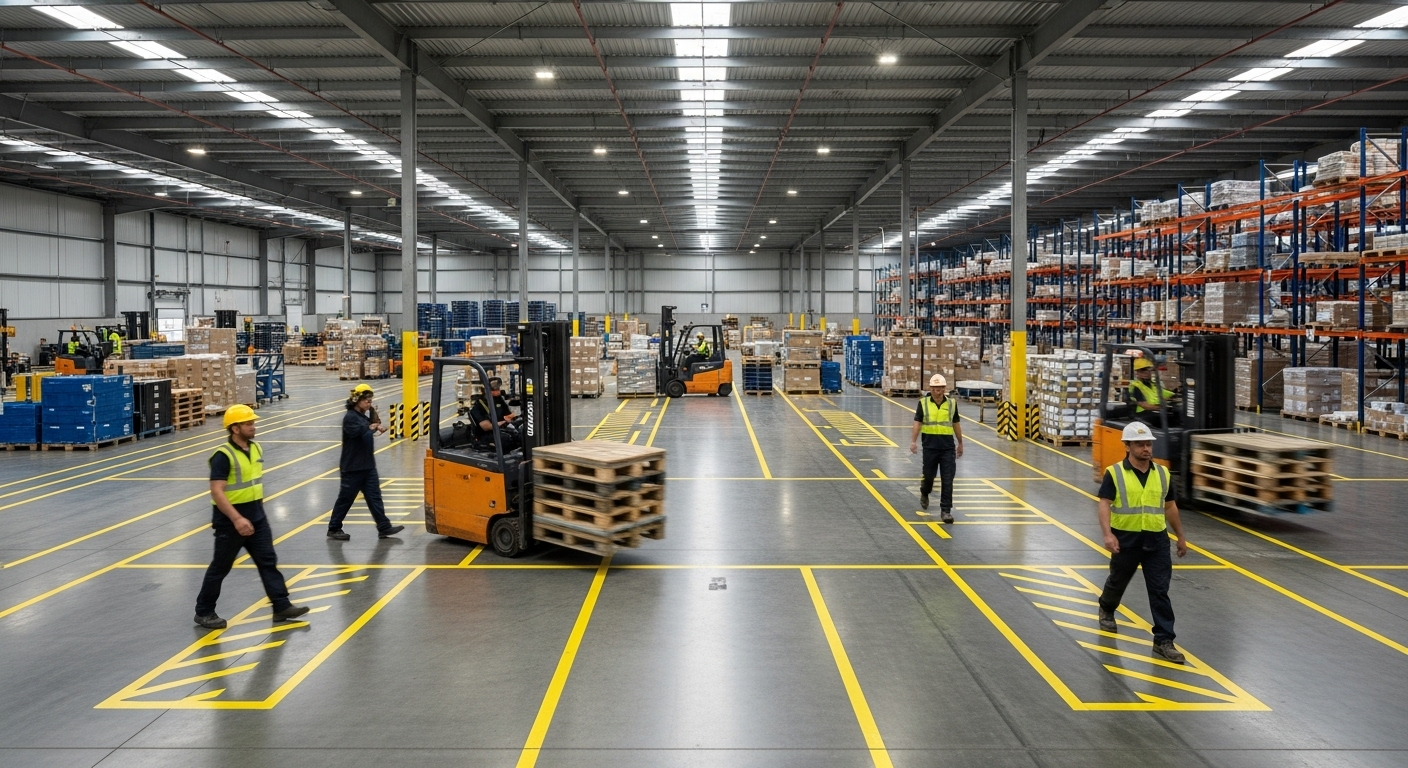
Nowhere is the language of line marking more critical than inside a factory or warehouse. With forklifts, machinery, and staff moving in a confined space, clear visual boundaries are non-negotiable for preventing accidents and improving workflow.
We’ve helped countless Auckland businesses establish clear, compliant safety systems on their floors. Following our complete guide to warehouse line marking ensures every zone is clearly defined. This includes marking out:
- Internal walkways to separate foot traffic from vehicle routes.
- Pallet lanes to keep storage areas organised and accessible.
- Hatched boxes to keep critical areas like fire exits and electrical panels clear.
- Equipment parking lines to ensure machinery has a designated, safe place when not in use.
These markings create a predictable environment. When a forklift driver knows exactly where pedestrians will be, and a worker on foot knows the designated 'no-go' zones, the risk of a tragic incident drops significantly. It's about building a visual system that becomes second nature to everyone on site.
Why Professional Quality Matters for Lasting Safety
You might be tempted to save a few dollars with a DIY job or by choosing the cheapest quote. In our experience, this is almost always a false economy. The effectiveness of line marking depends entirely on two things: precision and durability.
That’s why we only use high-quality, durable paints compliant with NZ safety standards . These materials are designed to withstand heavy traffic, industrial cleaning, and the Auckland weather. A professional application ensures the lines are crisp, clear, and precisely where they need to be for maximum effect. Faded, flaking paint applied incorrectly can be even more dangerous than no lines at all, as it creates a false sense of security.
Treating line marking as a proactive investment in safety, efficiency, and compliance is the key to unlocking its value. It’s a direct path to a safer, more organised, and more professional-looking business.
How Much Does Professional Line Marking Cost?
The cost of line marking varies. It depends on factors like the size of the area, the type of surface, the amount of preparation needed, and the specific paints required for the job. Because every site is unique, a one-size-fits-all price doesn't really work.
To give you complete clarity, we provide a free, no-obligation quote for every project. This way, you know the exact cost upfront, with no surprises. For expert line marking services in Auckland that prioritise safety and durability, get your free quote from Hanover Linemarking today.
_Disclaimer: The information provided in this article is for general informational purposes only and does not constitute legal or professional safety advice. All businesses should consult with a qualified health and safety professional and adhere to all relevant WorkSafe New Zealand regulations and guidelines to ensure compliance and workplace safety._