7 Common Car Park Marking Mistakes and How to Avoid Them

The Hanover Linemarking Team • 14 July 2026

Professional Car Park Line Marking: Avoiding Seven Costly Layout Mistakes

Key Takeaways

  • Accurate bay dimensions reduce the high risk of vehicle damage and improve user experience.
  • Compliance with New Zealand accessibility standards is a legal requirement for all commercial sites.
  • High-grade acrylic paints and professional application methods prevent premature fading and rework costs.
  • Strategic traffic flow design and pedestrian walkways significantly lower the risk of accidents.
  • Engaging specialists for a new layout is more cost-effective than fixing a poorly planned DIY project.

We see car parks as the handshake of a business. They provide the very first interaction a customer, employee, or visitor has with your organisation. When that interaction involves cramped spaces, confusing directions, or faded lines, it sets a tone of disorder. In our experience, many North Island businesses treat car park markings as an afterthought, only to realise later that a poorly planned layout creates genuine liability.

Car parks are often high-stress environments. A New Zealand car park study cited by our team found that almost three-quarters (72%) of drivers had returned to their parked car to find it damaged, with most offenders failing to leave any contact details. This statistic frames car parks as genuine danger zones. Clear, compliant, and professional line marking serves as the primary tool to mitigate these risks and keep traffic moving safely.

1\. Undersized Parking Bays

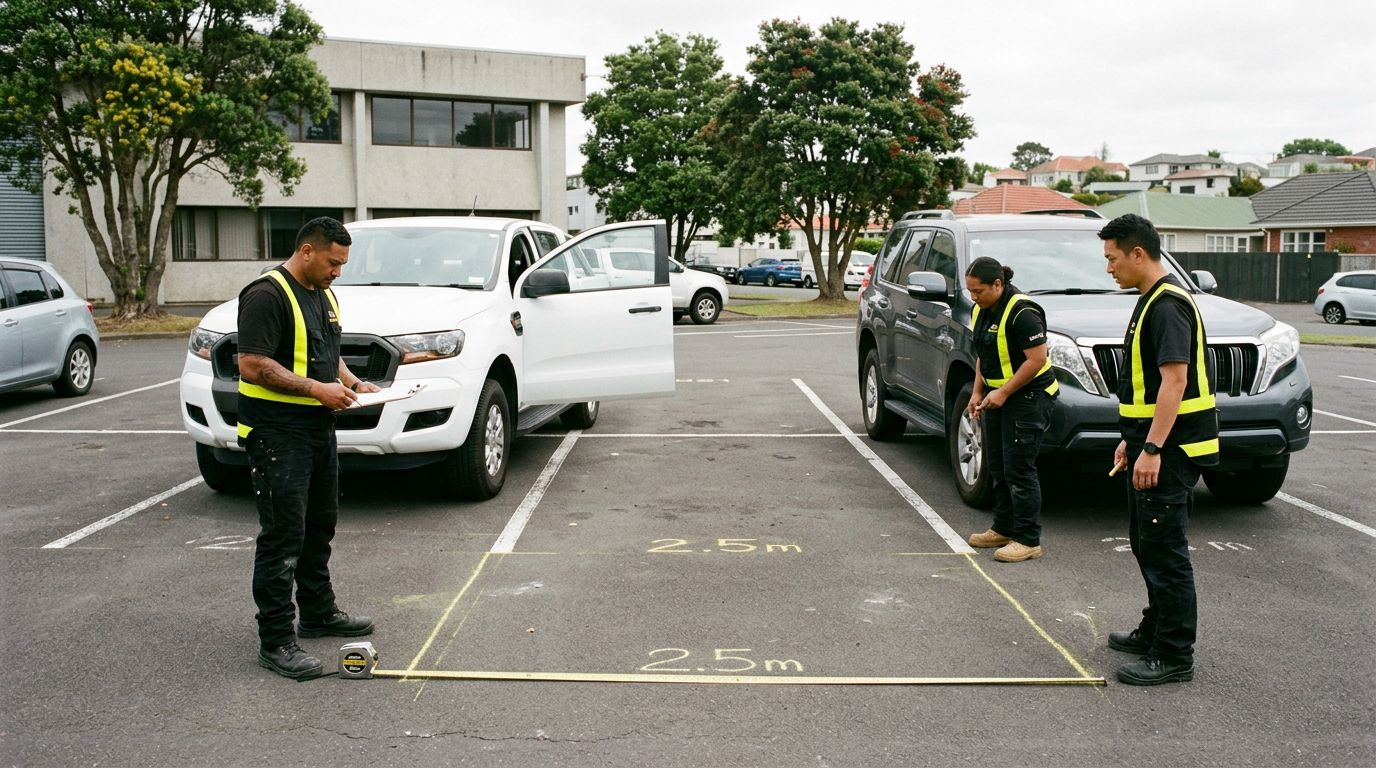
The most frequent mistake we observe is the attempt to squeeze too many bays into a limited area. While it seems like a way to maximise capacity, it usually leads to the vehicle damage mentioned above. New Zealand standards are specific about these dimensions to ensure modern vehicles can actually fit. According to AS/NZS 2890.1:2004, a typical 90-degree off-street car park space in New Zealand is 2.5 m wide and 5.0 m long, with an aisle width of approximately 6.0 m.

Modern SUVs and utes, such as the Ford Ranger or Audi Q7, often exceed 2.0 metres in width and 5.3 metres in length. When bays are marked at the bare minimum or narrower, drivers have almost no room to open doors. We recommend evaluating your specific user base before marking. If your site frequently hosts large trade vehicles, slightly wider bays improve safety and reduce the likelihood of panels being dinged.

2\. Non-Compliant Accessible Parking

Accessibility is a legal obligation, not a suggestion. We often see accessible bays that are either too narrow or insufficient in number. Government guidance specifies that a car park with 21 to 50 spaces must provide no less than two accessible spaces. Failing to meet these ratios exposes building owners to enforcement action and fails the community members who rely on them.

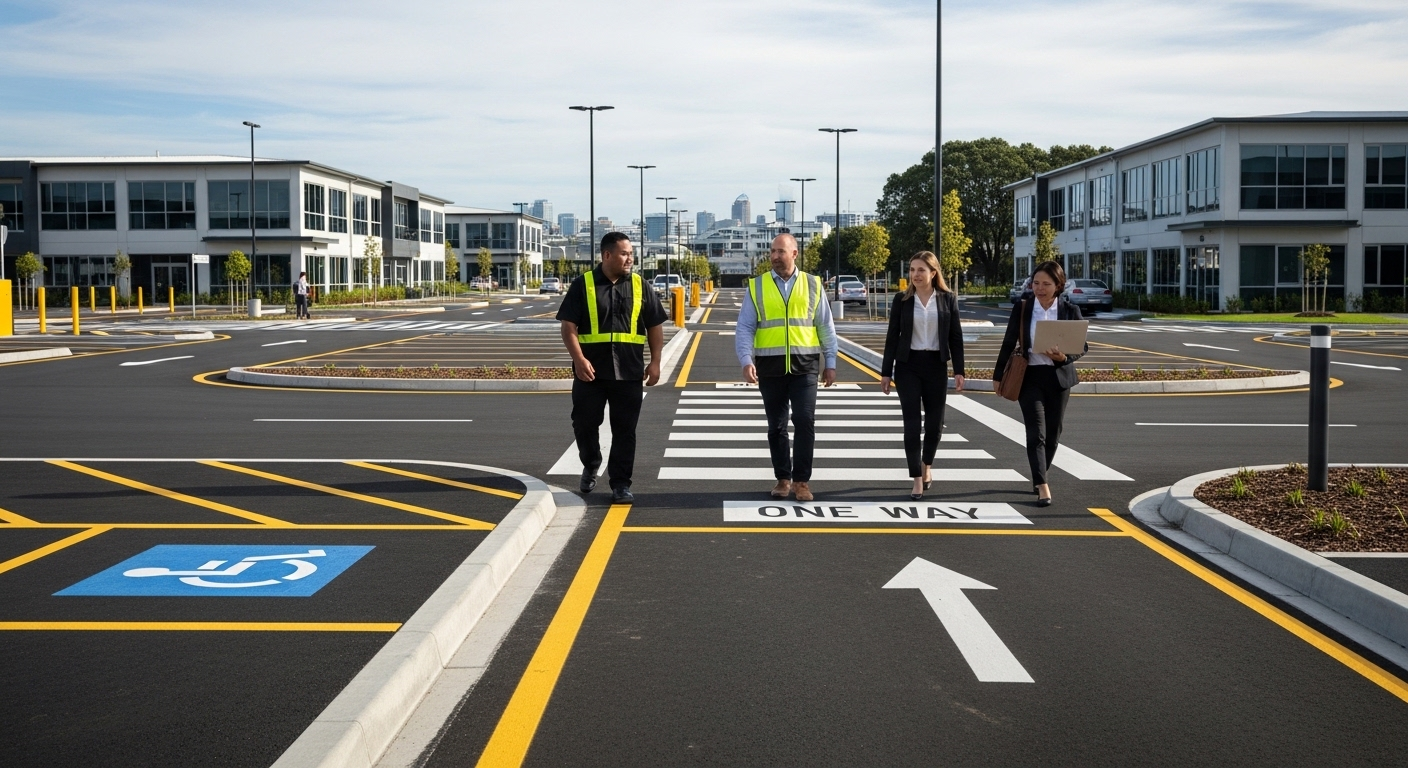
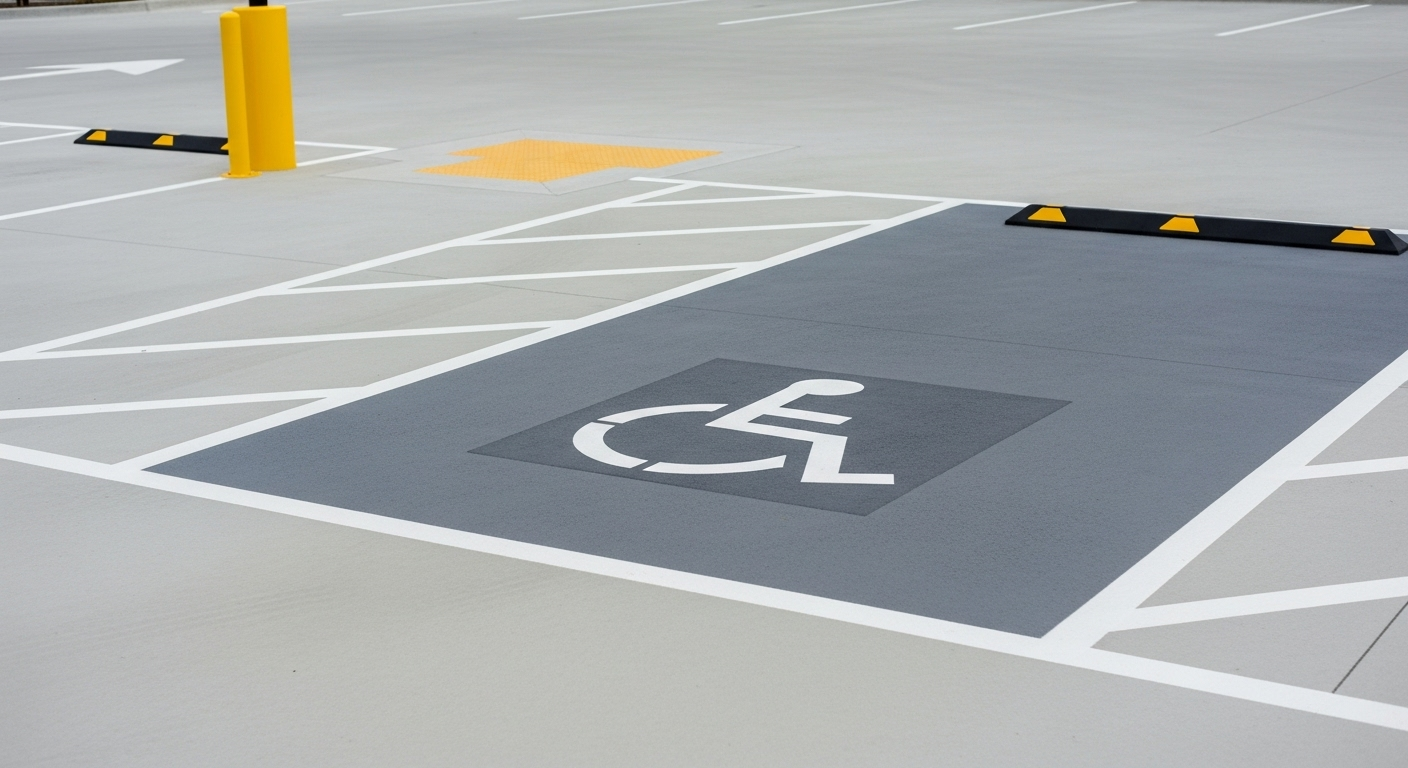
Compliance also extends to the physical dimensions of the bay. An accessible or mobility bay must be at least 3.5 m wide and 5.0 m long to be compliant. This extra width allows for wheelchairs and mobility aids to be deployed safely. When we mark these areas, we ensure they include the required yellow hatching and a continuous accessible route to the building entrance. Our car park line marking team specialises in ensuring these layouts meet every NZ standard from the start.

3\. Ignoring Pedestrian Walkway Needs

A car park is a shared space between vehicles and people. A common design flaw is focusing entirely on where cars sit while ignoring how people get to the door. Without designated walkways, pedestrians are forced to weave between moving vehicles, significantly increasing the risk of accidents. Professional car park marking services prioritise the separation of foot traffic and vehicle flow to enhance safety.

We solve this by integrating clear pedestrian crossings and dedicated walking paths. Using high-visibility colours and specific stencils helps drivers identify where people are likely to appear. Whether you are managing a school in Auckland or a warehouse in Waikato, clearly defined pedestrian routes are a cornerstone of health and safety compliance.

4\. Poor Traffic Flow and Directional Logic

Confusion causes congestion. When drivers are unsure of which way to turn or where the exit is, they make unpredictable manoeuvres. We have seen many sites where the lack of directional arrows leads to head-on standoffs in narrow aisles. Well-planned directional arrows and clear markings improve safety and maximise the capacity of the lot.

If your current car park suffers from congestion, our team can redesign your car park layout for better efficiency. We look at entry and exit points, aisle widths, and the placement of loading zones to create a logical path. Adding physical aids like speed humps and wheel stops further reinforces the intended traffic flow and protects your infrastructure.

5\. Using Low-Quality Paint or DIY Methods

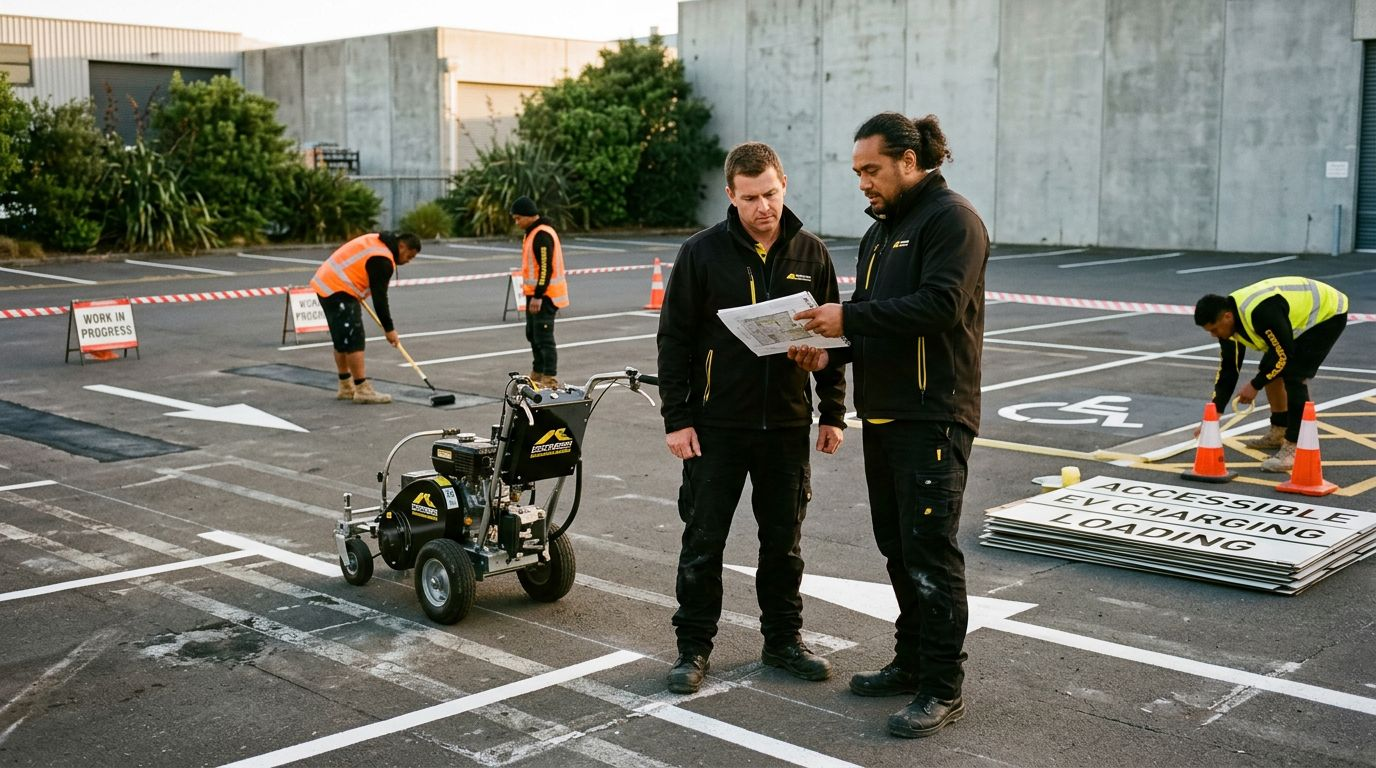
The temptation to use a roller and a tin of hardware-store paint is strong for some property managers. However, DIY line marking usually results in crooked lines and paint that peels within months. Standard road paint is different from the heavy-duty products required for high-traffic areas. We use high-grade acrylic paints for car park painting because they offer superior durability and visibility.

Professional equipment ensures that lines are perfectly straight and applied at the correct thickness. Poorly applied paint fades quickly under the harsh New Zealand sun, leading to a messy appearance that reflects poorly on your business. Investing in professional application from the beginning ensures long-lasting results that stand up to constant vehicle wear.

6\. Neglecting Specialised Bays

A modern car park needs to accommodate more than just standard petrol vehicles. We often see sites that have failed to plan for EV charging stations, parent and pram parks, or click and collect zones. These specialised bays are becoming standard expectations for shoppers and employees alike. Neglecting them makes your facility feel dated and less welcoming.

We provide a wide range of stencils and colours to clearly designate these areas. By integrating these spaces into your initial plan, you ensure they are placed in the most convenient and safe locations. For instance, parent and child bays should ideally be located close to entrances to minimise the distance small children have to walk through traffic areas.

7\. The False Economy of Poor Planning

Attempting to save money by using an inexperienced contractor or a poorly thought-out layout often results in significant rework costs. Fixing a mistake is always more expensive than doing it right the first time. Industry data shows that a standard re-mark of a 30-bay car park typically costs between NZ$1,500 and $3,500 plus GST, while new layouts on bare seal range from $55 to $95 per bay.

When you factor in the cost of concrete grinding to remove incorrect lines and the disruption to your business, the "cheap" option quickly becomes the most expensive. Engaging professional car park marking in Auckland and across NZ ensures that your investment is protected by compliance and quality. We take pride in helping North Island organisations avoid these pitfalls by providing expert advice and precision application.

Whether you need to refresh faded lines or completely overhaul a warehouse floor layout, our team at Hanover Linemarking Services brings over a decade of experience to every project. We understand the nuances of NZ standards and the practical realities of managing traffic. Getting your car park right is about more than just paint on the ground. It is about creating a safe, efficient, and professional environment for everyone who visits your site.

by The Hanover Linemarking Team 29 January 2026
Discover why professional line marking is a critical safety investment for Auckland businesses. Learn how Hanover Linemarking's expert services enhance safety, efficiency, and compliance in car parks and warehouses.
by The Hanover Linemarking Team 20 November 2025
Transform your school or club's space with professional court and playground marking. Our guide covers safety standards, costs, and creative ideas for NZ conditions.
Two workers striping a parking lot with yellow paint. One on the left is on the phone. The other on the right is guiding the machine.
13 October 2025
Discover why professional line marking services in NZ, like Hanover Linemarking, offer superior quality and long-term value compared to DIY. Get expert road marking and car park solutions.
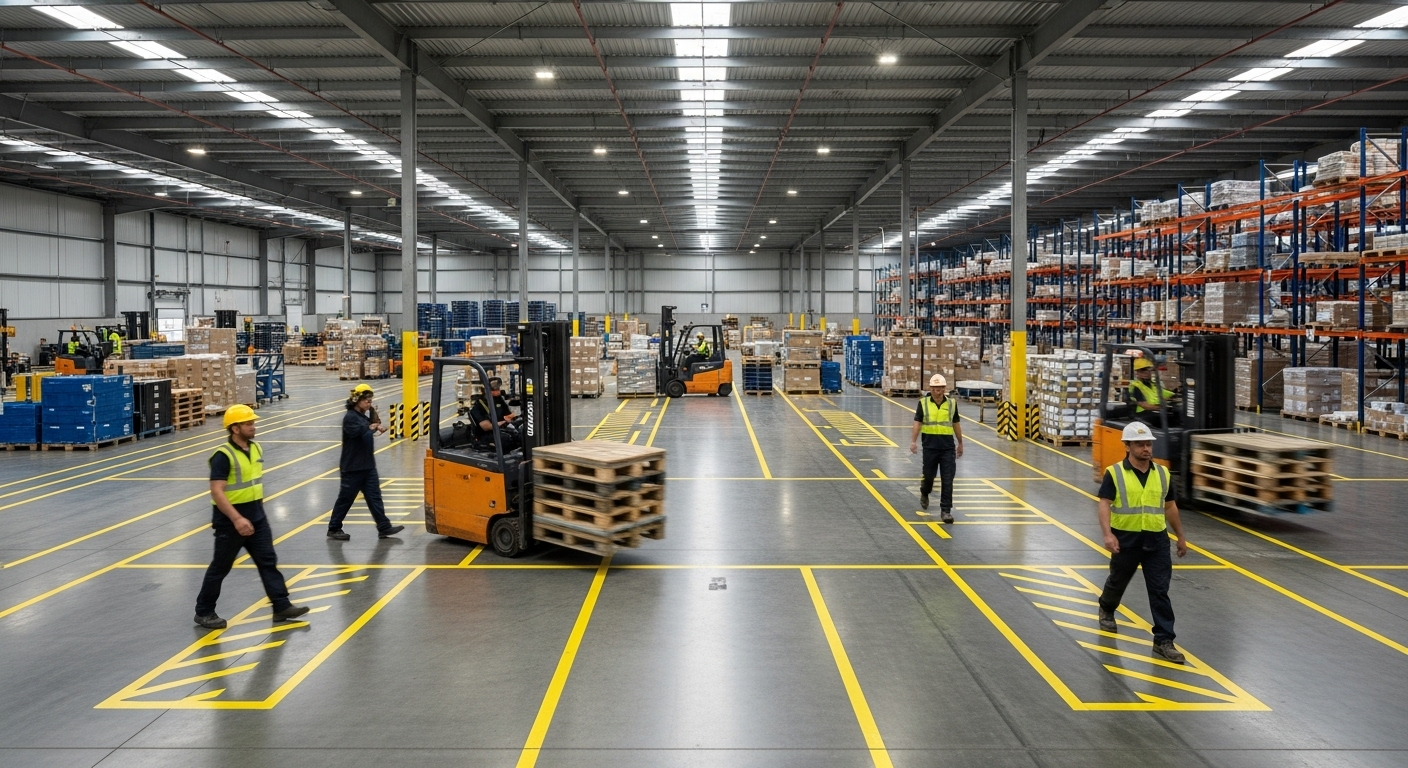
Warehouse interior: Forklifts and workers in safety vests; pallets and shelving with products.
18 August 2025
Boost safety and efficiency in your NZ warehouse with professional line marking. Our guide covers everything from durable materials to compliance standards.
Handicapped parking space with wheelchair symbol painted on gray pavement, with bumpers and yellow pole.
24 July 2025
Discover why professional car park line marking is essential for safety, compliance, and customer experience in New Zealand. Contact us for expert linemarking services.

Children playing hopscotch on a colorful asphalt playground. They run toward the viewer with joyful expressions.
7 May 2025
Need line marking in NZ? Learn how to choose the right marking solution for your car park, warehouse, or road. Hanover Linemarking: Auckland specialists.