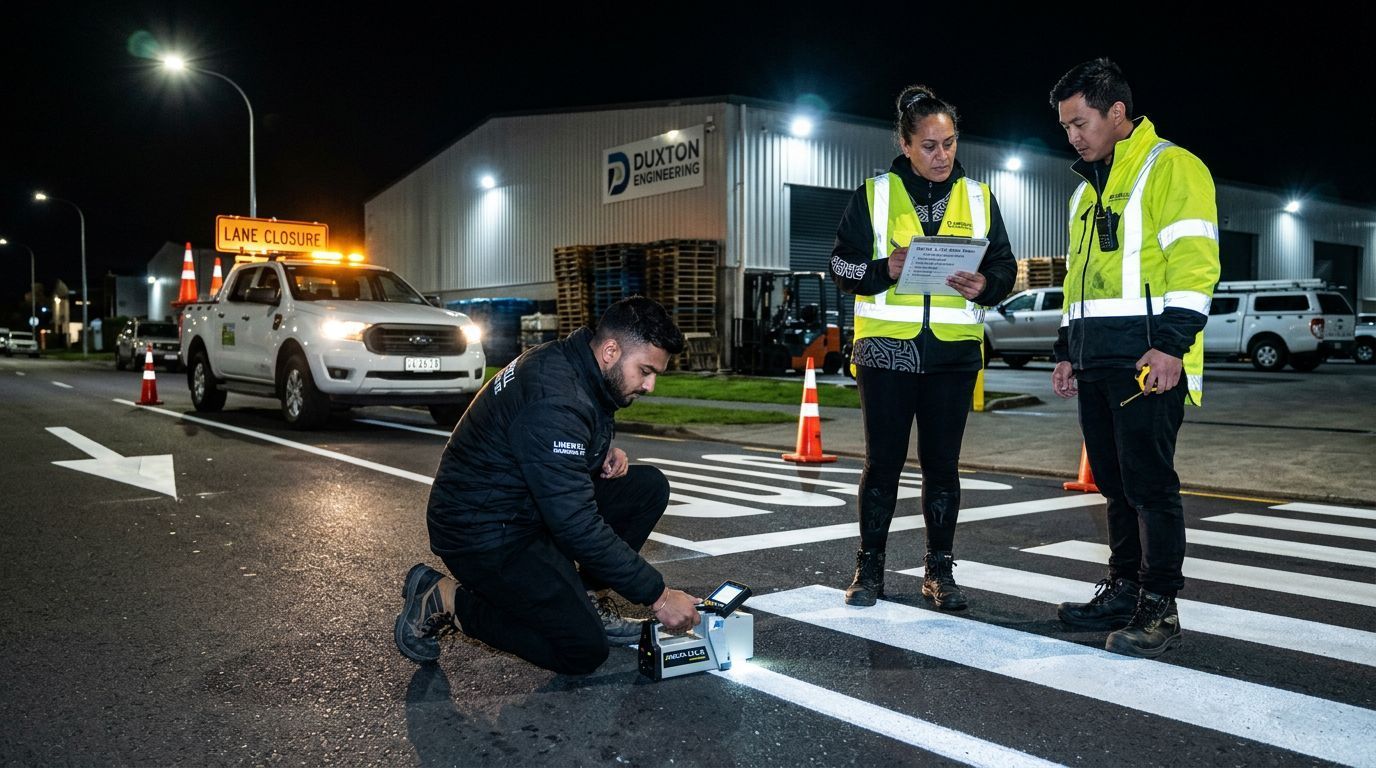
Innovations in Line Marking: What's Next for Road and Surface Safety?

The Hanover Linemarking Team • 3 November 2026

The Future of Line Marking: Next-Generation Solutions for New Zealand Infrastructure

Key Takeaways

  • The global road marking market is expanding rapidly as safety regulations and smart mobility projects drive demand for high-performance materials.
  • Long-life materials like thermoplastics and Cold Applied Plastic offer significantly better durability and cost-effectiveness than traditional paints.
  • Advanced retroreflective technology is essential for reducing road accidents, particularly during wet nights on North Island roads.
  • Modern markings are being engineered to support machine-vision systems and autonomous vehicle navigation.
  • Professional application remains the most reliable way to ensure compliance with New Zealand safety standards and environmental expectations.

We often think of line marking as a static part of our infrastructure, a simple coat of paint applied and then forgotten until it fades. In our experience, this view is shifting as the industry undergoes a period of significant change. The global road marking materials market is projected to grow from USD 8.9 billion in 2024 to USD 12.84 billion by 2030. This represents a Compound Annual Growth Rate (CAGR) of 6.3 percent. This growth rate, which measures the mean annual growth over a specific period, is being driven by stricter safety regulations, the rise of smart-mobility projects, and a growing demand for eco-friendly, long-life materials.

For business owners, school boards, and public-sector decision makers across the North Island, these global trends have practical local implications. Whether you are managing a busy car park in Auckland or a school zone in Tauranga, the materials we choose today determine the safety and maintenance costs of your site for years to come. We are seeing a move away from legacy products toward systems that stay visible in the rain, support modern vehicle sensors, and reduce the frequency of maintenance cycles.

Why Materials are Changing: From Paint to High-Performance Plastics

Traditional solvent-based markings often fade within six to twelve months, leading to a cycle of constant reapplication. We have seen this happen frequently when site managers prioritise the lowest upfront cost, only to find their investment has literally vanished after a single wet winter. Modern alternatives are proving to be a better long-term investment. In the coatings segment, thermoplastic systems commanded 38.11 percent of global traffic road marking coatings revenue in 2025, largely because they offer a lifespan of three to five years.

At Hanover Linemarking Services, we focus on matching the right technology to the specific job. For high-stress zones like cycle lanes, bus stops, and heavy-traffic junctions, we often recommend Cold Applied Plastic (CAP), also known as MMA. CAP solutions provide excellent adhesion and long-life performance, which is why they are a staple in our choosing the right line marking solution guidance. While these materials might have a higher initial cost, their durability means they often prove more economical over the life of the asset compared to standard waterborne or solvent-based paints.

Visibility that Saves Lives: The Role of Retroreflectivity

Safety is the primary driver behind most advancements in our field. A critical factor is retroreflectivity, the ability of a surface to return light back to its source, such as a vehicle's headlights. Maintaining high levels of visibility is especially challenging on wet nights, which are common across the North Island. Field studies referenced in the 2026 MUTCD update show that wet-reflective markings can reduce run-off-road crashes by 46 percent. This is a staggering statistic that highlights why we prioritise high-spec materials for critical safety zones.

Regulators are increasingly mandating minimum retroreflectivity thresholds. For many higher-speed roads, maintaining levels of 50 to 100 mcd/m²/lx is now recommended. The term mcd/m²/lx stands for millicandela per square metre per lux, which is the standard unit used to measure the brightness of a marking. To achieve these results, we use high-quality glass beads with a high refractive index, ensuring that markings remain visible to drivers when they are needed most. This focus on continuous wet retroreflectivity is a foundational technology for keeping New Zealanders safe on the road.

Smart Roads and the Rise of Machine-Vision Markings

The next generation of vehicles relies on more than just the human eye. Advanced Driver Assistance Systems (ADAS) and autonomous vehicles use cameras and sensors to stay within lanes. For these systems to work reliably, road markings must be clear and machine-readable. We are seeing a global trend toward smart road marking integration, where materials are engineered specifically for LIDAR and infrared recognition. LIDAR stands for Light Detection and Ranging, a remote sensing method that uses light in the form of a pulsed laser to measure distances.

In Europe, structured markings have demonstrated that boosting retroreflection up to 1000 mcd/m²/lx improves detection by vehicle sensors, particularly in poor weather. This is why high-contrast, durable markings are becoming the standard for new developments. We ensure that our specialised B-type road marking services, which include pedestrian crossings, junctions, and bus stops, meet the high-visibility requirements necessary for both human drivers and modern vehicle technology.

Sustainability and Precision: The Next Generation of Application

Environmental expectations are tightening, and the industry is responding with greener binders and low-VOC (Volatile Organic Compound) options. For example, some new cold-plastic binders are made with 30 percent recycled PMMA, which is a type of transparent thermoplastic. These materials deliver a carbon footprint that is approximately 20 percent lower than virgin equivalents. Beyond the materials themselves, the way we apply them is also changing. Robot-assisted application is becoming more common for sports courts and large industrial sites, ensuring a level of precision and consistency that is difficult to achieve manually.

We have also seen fascinating developments in photo-luminescent markings. In some international pilots, glow-in-the-dark lines charge during the day and provide up to ten hours of visibility at night. While some of these technologies are still in the testing phase, they point toward a future where road markings do more than just sit on the surface: they actively contribute to energy efficiency and situational awareness.

Why Professional Expertise is More Critical Than Ever

As materials and application technologies become more advanced, the cost of getting it wrong increases. Achieving straight, compliant, and durable lines requires specialised equipment and a deep understanding of New Zealand standards. We often see the results of a "false economy" where cheap hardware-store paints are used for car parks, only to peel within months. Professional application ensures that the right primers and high-grade acrylics or plastics are used for the specific surface and traffic volume.

Our team brings over a decade of experience to every project across the North Island. We understand that a successful project is about more than just the lines: it involves site surveys, traffic management, and strict adherence to NZTA specifications. Investing in professional services is a better long-term strategy than attempting a DIY approach, as detailed in our cost and quality comparison. By choosing modern materials and expert application, you ensure your site is safe, compliant, and ready for the future of New Zealand transport.

Disclaimer: Road safety and line marking requirements are subject to specific New Zealand regulations and standards. The information provided in this article is for educational purposes and should not replace a professional site assessment. Always consult with a qualified specialist to ensure your markings meet all legal and safety obligations.

by The Hanover Linemarking Team • 1 September 2026
Understand the difference between a speed hump and a speed bump for your NZ property. Learn how professional traffic calming installation improves safety and flow.
by The Hanover Linemarking Team • 1 September 2026
Ensure your car park meets NZS 4121:2001 standards. Learn the essential dimensions, layout, and legal requirements for disabled parking bays in New Zealand.
by The Hanover Linemarking Team • 14 July 2026
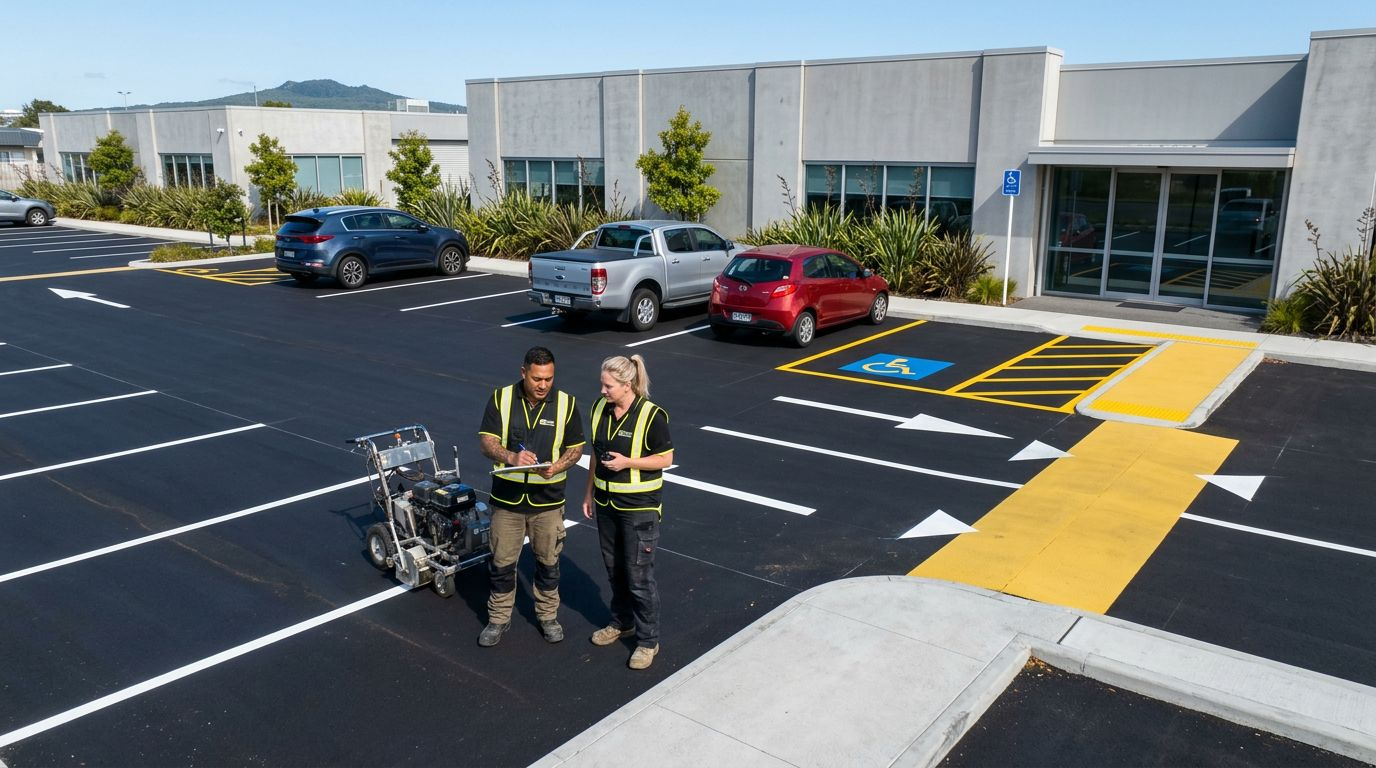
Discover 7 common car park marking mistakes that risk safety and compliance. Learn how professional car park line marking in Auckland and Waikato improves flow.
by The Hanover Linemarking Team • 29 January 2026
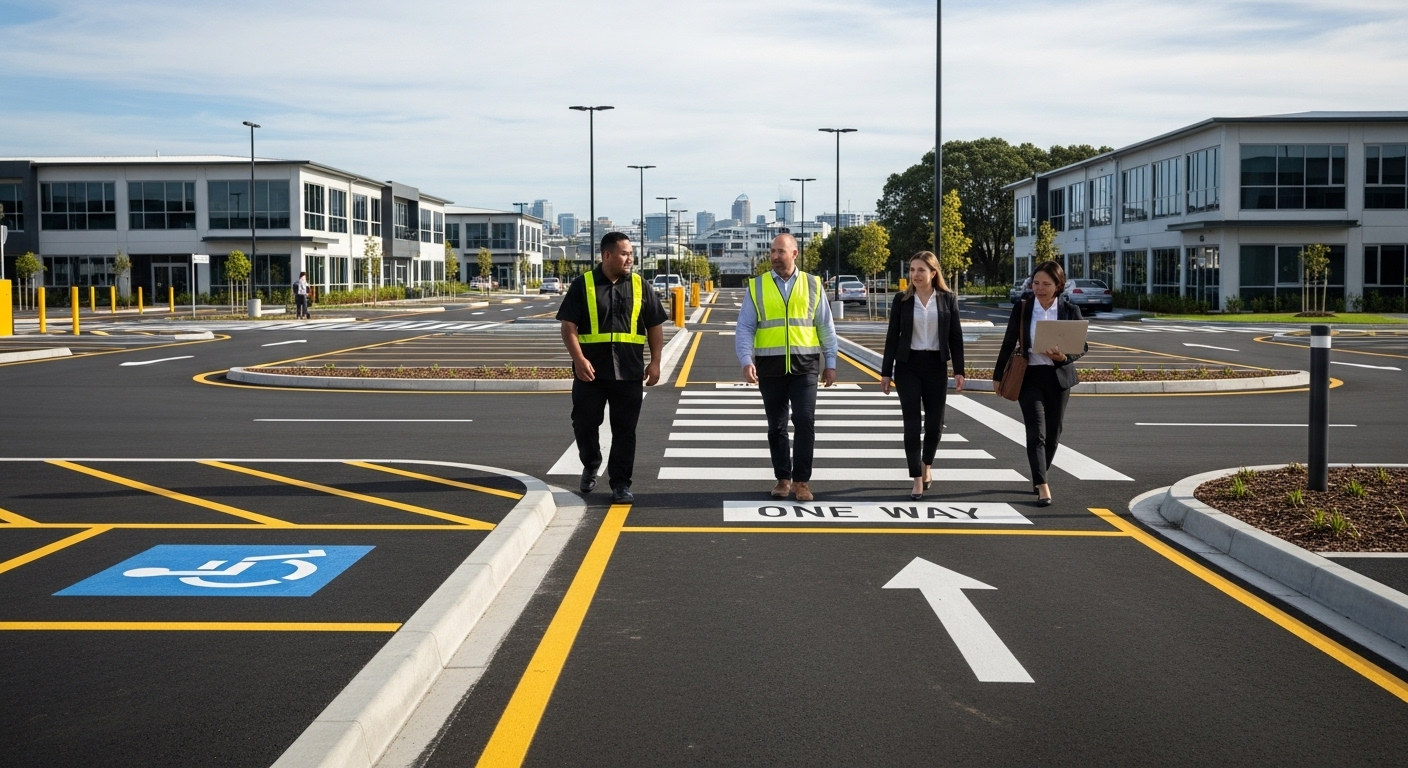
Discover why professional line marking is a critical safety investment for Auckland businesses. Learn how Hanover Linemarking's expert services enhance safety, efficiency, and compliance in car parks and warehouses.
by The Hanover Linemarking Team • 20 November 2025
Transform your school or club's space with professional court and playground marking. Our guide covers safety standards, costs, and creative ideas for NZ conditions.
Two workers striping a parking lot with yellow paint. One on the left is on the phone. The other on the right is guiding the machine.
13 October 2025
Discover why professional line marking services in NZ, like Hanover Linemarking, offer superior quality and long-term value compared to DIY. Get expert road marking and car park solutions.
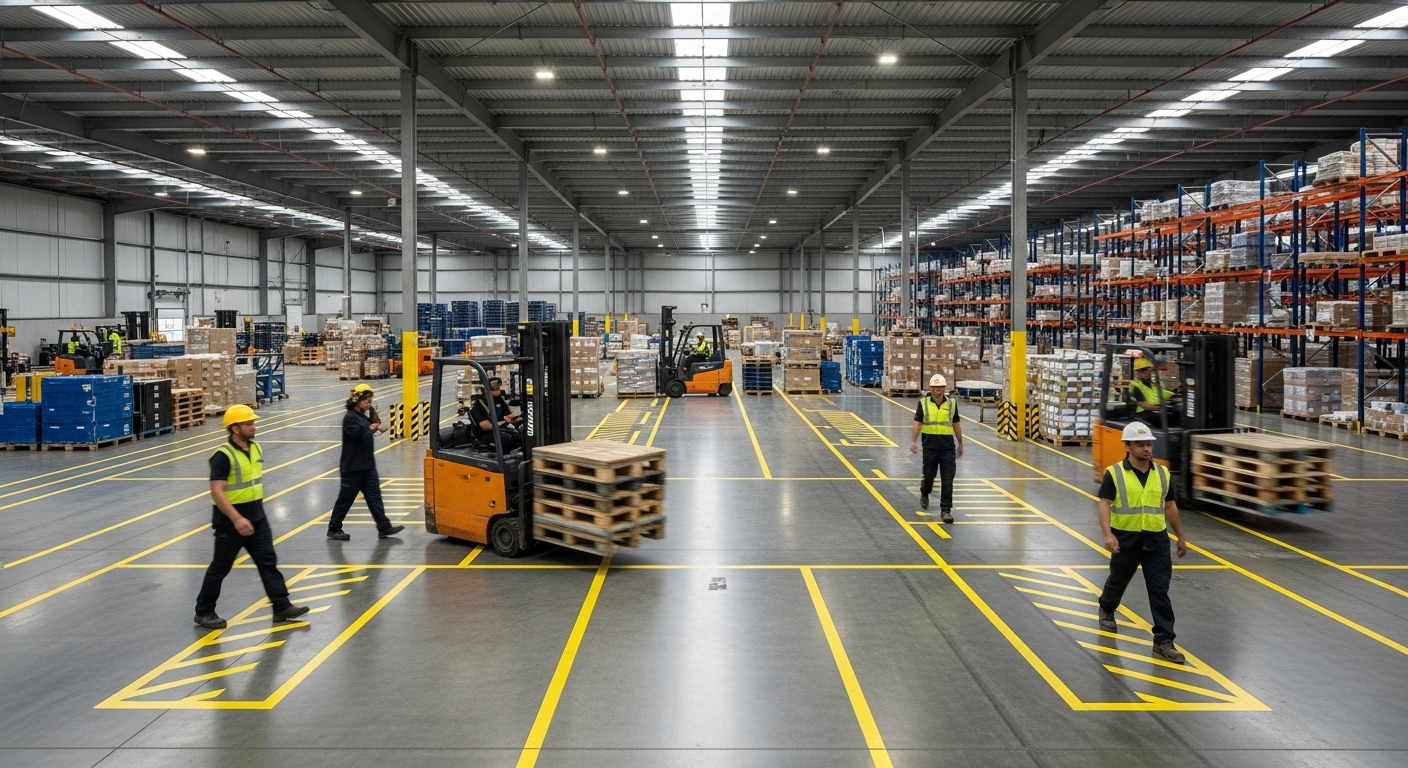
Warehouse interior: Forklifts and workers in safety vests; pallets and shelving with products.
18 August 2025
Boost safety and efficiency in your NZ warehouse with professional line marking. Our guide covers everything from durable materials to compliance standards.
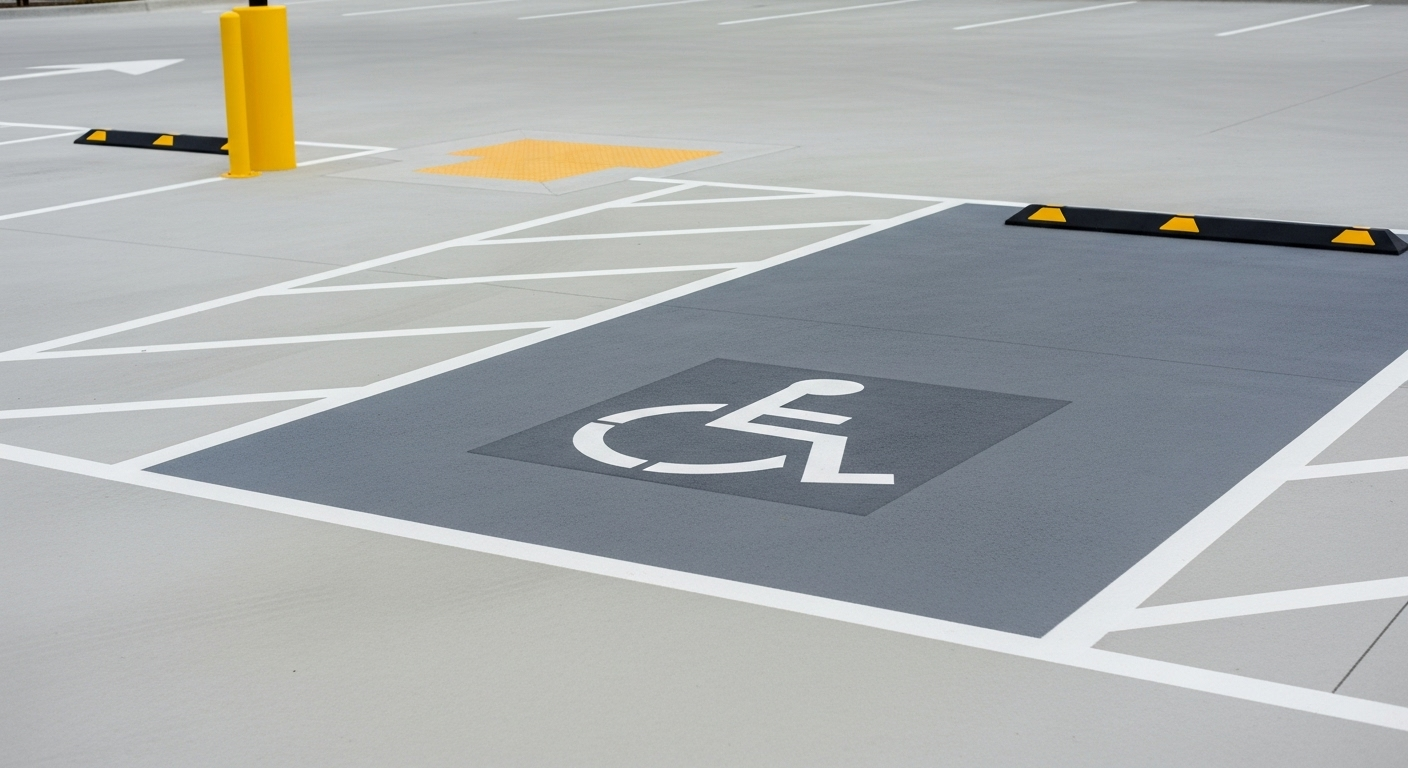
Handicapped parking space with wheelchair symbol painted on gray pavement, with bumpers and yellow pole.
24 July 2025
Discover why professional car park line marking is essential for safety, compliance, and customer experience in New Zealand. Contact us for expert linemarking services.

Children playing hopscotch on a colorful asphalt playground. They run toward the viewer with joyful expressions.
7 May 2025
Need line marking in NZ? Learn how to choose the right marking solution for your car park, warehouse, or road. Hanover Linemarking: Auckland specialists.